On this page
Key takeaways
- Test the water before every soak and at least 2–3 times a week. The CDC recommends checking chlorine and pH twice a day, more often with many bathers.
- Keep free chlorine at 3 ppm or higher or bromine at 4 ppm or higher, with pH between 7.2 and 7.8.
- Weekly: shock, rinse the filter and wipe the waterline. The whole routine takes about 20 minutes.
- Deep-clean the filter every 1–3 months, drain and refill every 3–4 months, replace the filter every 1–2 years and the cover every 5–7 years.
Step-by-step checklist
-
Test the water
Dip a test strip or use a drop test kit and read sanitizer, pH and total alkalinity.
-
Balance alkalinity, then pH
Adjust total alkalinity to 80–120 ppm first, then pH to 7.2–7.8, running the jets for 20–30 minutes between additions.
-
Shock the water
Add the shock dose on the label for your tub's volume with the cover off and jets running.
-
Rinse the filter
Remove the cartridge and spray between the pleats with a garden hose from top to bottom.
-
Wipe the waterline and cover
Wipe the scum line with a soft cloth and clean the underside of the cover.
Retest after the wait time in the guide below before adding anything else.
A good hot tub maintenance schedule is short: test the water before every soak and at least 2–3 times a week, shock and rinse the filter weekly, deep-clean the filter monthly, and drain every 3–4 months. Everything else (filter and cover replacement, a yearly check-up) happens once in a long while.
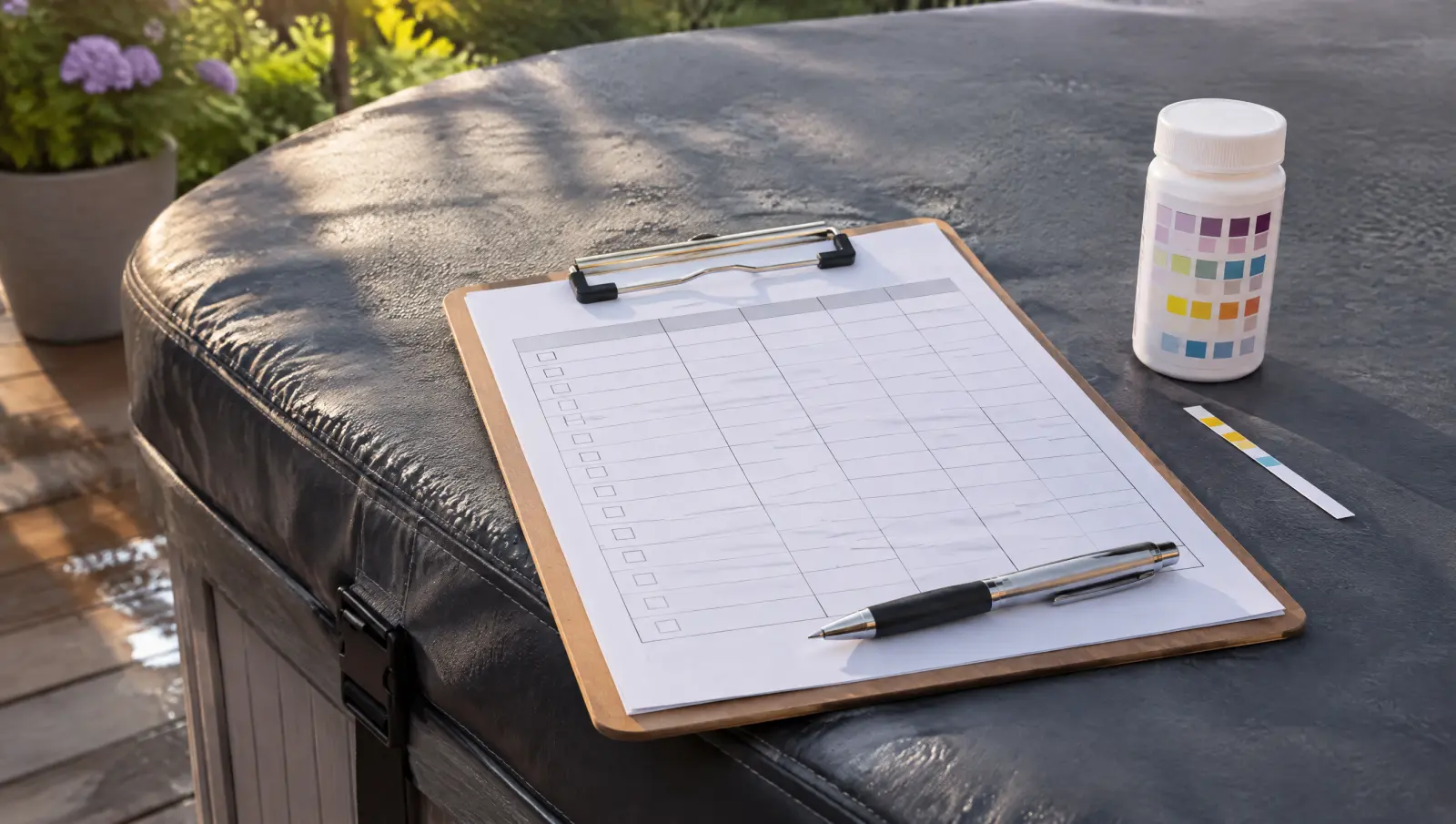
Print the checklist below and keep it near the tub. Every task links to the guide that explains how to do it, and the numbers match our complete hot tub maintenance guide.
The printable hot tub maintenance checklist
| How often | Task | Time | |---|---|---| | Every use | Shower before getting in; run the jets 15–20 minutes after the soak; put the cover back on and lock the straps | 2 min | | Every use | Test sanitizer and pH before the soak | 2 min | | 2–3 times a week | Test sanitizer, pH and alkalinity (the CDC recommends twice a day); top up sanitizer to 3+ ppm free chlorine or 4+ ppm bromine; check the water covers the skimmer opening by at least an inch | 5 min | | Weekly | Shock; rinse the filter; wipe the waterline; clean the underside of the cover; check the bromine floater if you use one | 20 min | | Monthly | Test calcium hardness; deep-clean the filter (at least every 1–3 months); clean and condition the cover; inspect jets and pillows; press the GFCI test button | 30 min + overnight soak | | Every 3–4 months | Flush the plumbing, drain, clean the shell, clean or replace the filter, refill and rebalance | 2–3 hours | | Yearly | Replace the filter cartridge if it’s due (every 1–2 years); book a preventive check-up with a spa technician; check the cover for weight, sagging or cracks | 1 hour | | Every 5–7 years | Replace the cover | — |
Where each task is explained:
- Testing: what the readings mean and which strips to buy, in best hot tub test strips.
- Topping up sanitizer and balancing pH: our hot tub chemicals guide has the target ranges and label doses. Not sure which sanitizer to use? Read bromine vs chlorine for hot tubs.
- Shocking: covered step by step in the shock section of the chemicals guide.
- Rinsing and deep-cleaning the filter: how to clean a hot tub filter and our picks of filter cleaners.
- Replacing the filter: best replacement hot tub filters.
- Draining and refilling: how to drain a hot tub.
- Cover care and replacement: best hot tub covers and cover lifters.
The numbers to aim for
Free chlorine 3–5 ppm (CDC minimum 3 ppm) or bromine 4–6 ppm (CDC minimum 4 ppm) · pH 7.2–7.8 · total alkalinity 80–120 ppm · calcium hardness 150–250 ppm · cyanuric acid as low as possible.
The 20-minute weekly routine
Pick a day, set a reminder, and do these five steps in order. The order matters: balanced water makes the shock work better, and a clean filter catches what the shock breaks down.
- Test the water (2 minutes). Dip a test strip or use a drop test kit and read sanitizer, pH and total alkalinity. Take the sample from about elbow deep, away from the jets and any floater.
- Balance alkalinity, then pH (5 minutes, plus circulation). Adjust total alkalinity to 80–120 ppm first, then pH to 7.2–7.8, running the jets for 20–30 minutes between additions. Alkalinity pulls pH with it, so fixing pH first often means doing it twice.
- Shock the water (2 minutes). Add the shock dose on the label for your tub’s volume with the cover off and jets running. Leave the cover off for at least 20 minutes so gases can escape.
- Rinse the filter (5 minutes). Turn the tub off, remove the cartridge and spray between the pleats with a garden hose from top to bottom. Skip the pressure washer, which tears the fabric.
- Wipe the waterline and cover (5 minutes). Wipe the scum line with a soft cloth and clean the underside of the cover with a spa-safe cleaner to keep mildew away.
While the water circulates after balancing, you can rinse the filter, so the whole thing fits in about 20 minutes of actual work.
Safety note
Never mix chemicals together or add two products at once. Add each one to the water separately with the jets running, and retest before adding the next.
Seasonal hot tub maintenance checklist
The core schedule doesn’t change through the year, but each season adds a few jobs.
| Season | Extra tasks | |---|---| | Spring | If the tub was shut down, refill and restart the chemistry from scratch. Pollen season clogs filters faster, so rinse more often. Inspect the cover for winter damage, and book the yearly check-up before the busy season. | | Summer | More soaks mean more testing: test daily if the tub gets used every day or by more than two people. Keep the cover on between uses to block sun and debris. Check the water level more often, and rinse swimsuits in plain water to keep foam down. | | Fall | Falling leaves end up in the filter and skimmer, so keep the cover locked and clear debris weekly. Plan your next drain before deep cold so you don’t have to do it in freezing weather. Check that the cover seals all the way around. | | Winter | Keep the tub running and the cover locked; still water in the pipes can freeze and crack them. Brush heavy snow off the cover. Keep the water level up, since evaporation is higher in cold, dry air. If you must shut down, drain completely and blow out the lines, or have a technician do it. |
Inflatable tubs: most aren’t rated for freezing temperatures. Check the manual, and drain and dry them completely before storing for the season. Compare models in our guide to the best inflatable hot tubs.
Going on vacation? Bullfrog Spas suggests testing and balancing, cleaning the filter, sanitizing and shocking before you leave, and lowering the temperature for trips longer than a week.
Adjusting the schedule for your tub
The checklist above fits a typical home hot tub used a few times a week. Adjust it if your use is different:
- Heavy use or a big household: test daily, shock after every party, and drain sooner. The rule of thumb: tub volume in gallons ÷ 3 ÷ average daily bathers = days between drains. A 450-gallon tub used by 4 people a day works out to about 38 days.
- Light use: keep testing at least 2–3 times a week anyway. Sanitizer burns off even when nobody soaks, and the CDC’s Legionella guidance is clear that it should never drop to zero.
- Bromine routine: check the floater weekly, and add sodium bromide again after every refill.
- Chlorine routine: expect to dose granules after each use or every couple of days. Spa chlorine (dichlor) adds stabilizer, which is one more reason to drain on schedule.
- Small or plug-and-play tubs: a smaller volume means readings swing faster and filters clog sooner. Dose in smaller amounts, test more often and rinse the filter every few days of regular use. See our plug-and-play hot tub guide.
Signs you’re behind schedule: cloudy water, foam, a strong chemical smell, itchy skin or weak jets. Start with sanitizer, pH and the filter, then check our fixes for cloudy hot tub water and hot tub foam.
Two things worth keeping on hand
You only need two items to keep up with this schedule beyond your regular chemicals: strips for the frequent tests and a line flush for the quarterly drain.
AquaChek 7-Way Pool and Spa Test Strips (100 count)
- Tests
- Free and total chlorine, bromine, pH, alkalinity, hardness, stabilizer
- Count
- 100 strips
Specs from the Amazon listing and manufacturer documentation
Reads seven values on one strip, including both free chlorine and bromine, so it covers the before-every-soak and 2–3 times a week tests whichever sanitizer you use.
Ahh-Some Hot Tub Purge & Jet Line Cleaner (4 oz)
- Dose
- 1 tsp per 125 gal (4 tsp per 500 gal)
- When
- Before each drain
- Size
- 4 oz tube
Specs from the Amazon listing and manufacturer documentation
Gel line cleaner for the every-3–4-months drain. The listing says 1 teaspoon treats 125 gallons and the tube gives 8 purges for tubs up to 400 gallons. Run it before you drain so the loosened biofilm leaves with the old water.
Cons
- The label warns soft-water users may need less to keep suds from overflowing
For the full shopping list, see our best hot tub chemicals guide.
How we put this guide together
We don’t own a hot tub, so this schedule isn’t based on our own routine. It’s built from sources you can check: the CDC’s hot tub guidance for testing frequency and sanitizer and pH levels, the CDC’s Legionella toolkit for the water-replacement formula, Bullfrog Spas’ maintenance schedule for the yearly check-up and vacation care, and the label directions of the products we mention. The frequencies match our hot tub maintenance hub; where sources disagree (Bullfrog suggests draining every 4–6 months), we use the more cautious interval. All sources are listed at the end of the page.
Sources
- CDC: Home Pool and Hot Tub Water Treatment and Testing · cdc.gov
- CDC: Controlling Legionella in Hot Tubs (Legionella Control Toolkit) · cdc.gov
- CDC: What You Can Do to Stay Healthy in Hot Tubs · cdc.gov
- Bullfrog Spas: Easy to Follow Hot Tub Maintenance Schedule · bullfrogspas.com
Frequently asked questions
What maintenance does a hot tub need?
Four things on a schedule: test and adjust the water (before every soak and at least 2–3 times a week), shock once a week, keep the filter clean (rinse every 1–2 weeks, deep-clean every 1–3 months, replace every 1–2 years), and drain and refill every 3–4 months. Add cover care and a yearly check-up and you've covered everything.
What is the easiest way to maintain a hot tub?
Turn it into a fixed routine: test before you get in, do a 20-minute session once a week (test, balance, shock, rinse the filter, wipe the waterline), and put the monthly and quarterly jobs on your calendar. A slow-release bromine floater also cuts down on day-to-day dosing. Showering before soaking keeps lotions and oils out, which means fewer foam and cloudiness problems.
Should you shock your hot tub every week?
Yes. A weekly shock burns off body oils, sweat and the chloramines that cause the chemical smell. Shock again after a party or any session with more bathers than usual, and always after a long period without use.
What is the most common problem with a hot tub?
Water problems: cloudy, foamy or smelly water. They almost always trace back to low sanitizer, pH out of range or a dirty filter, which is exactly what a regular schedule prevents. Fix those three first before buying specialty chemicals.
How often should you change hot tub water?
Every 3 to 4 months for most home hot tubs. Divide the tub's volume in gallons by 3, then divide by the average number of bathers per day: a 450-gallon tub used by 2 people a day works out to 75 days. Drain sooner if the water stays cloudy or foamy after shocking.
Do you need a professional to service a hot tub?
Not for routine care: testing, shocking, filter cleaning and draining are all owner jobs. Bullfrog Spas recommends an annual preventive check-up by a service professional, and a technician is the safest choice for winterizing a tub you plan to shut down, since water left in the lines can freeze and crack them.